
The Duncan Intelligence is a free, technical newsletter for business aircraft owners and operators. Written in-house by Duncan Aviation's technical representatives, each edition includes technical tips and advice on topics and trends in business aviation. It is a free, monthly e-mail subscription for aviation enthusiasts around the world.
Subscribe now to receive the Duncan Intelligence in your inbox.
Honeywell issued Service Bulletin AS907-72-9094 that calls for the replacement of the #4 carbon seal on the HTF7000/AS907 series engines. We can do this as an engine-only event in as little as 4 days.
Are your aircraft's RVSM operations fully compliant? While FAA requirements shifted away from standalone approved programs, configuration control and height-monitoring standards remain strictly enforced. Learn the key differences between Section 9 and Section 3 pathways and Duncan Aviation’s role in keeping you airworthy.
As business travel demands grow, many owners of piston twins begin looking at turboprops for greater range, payload, reliability, and operational flexibility. But moving to turbine power involves more than buying a larger aircraft. From maintenance planning and pilot training to operating costs and regulatory requirements, a successful transition depends on carefully matching the aircraft to the mission. This article examines the key benefits, tradeoffs, and considerations to help buyers determine whether a turboprop is the right next step for their operation.
Most overhaul delays don't start in the shop. They start with the logbooks when the serial number stamped on a part doesn't match the one listed in the maintenance logs. Reconstructing that paper trail can ground an aircraft for weeks and force you to replace parts that are actually totally fine. Here's a quick breakdown of where Chapter 5 records often fall through the cracks and how to resolve discrepancies before your aircraft goes down.
While the FAA encourages the TCAS 7.1 upgrade, strict ICAO and EASA mandates make it a necessity for international operators. Learn how Version 7.1 improves flight safety, impacts your flight plans, and what certification path your aircraft requires.
Not sure why the engine computer light begins to flash after several flights and the only fault you can see is fault code 237, ECTM Buffer Filled? Keep reading to learn more.
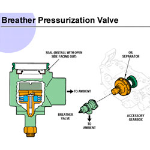
Many factors will cause a low or high oil pressure indication on TFE731 engines. One of the more common causes is a faulty Breather Pressurizing Valve (BPV).
The unit requires to be function tested every 1200 hours or 36 Months, whichever occurs first. However, we have often witnessed that these actuators do not make it between function tests.
The main system components of the factory-installed FDR covered by STC10001SC-D are obsolete. They are no longer available for purchase or repair, and there is no longer a method of support for any of these critical FDR components.
Proper maintenance of starter and generator terminal blocks is critical for aircraft safety and reliability. A seemingly small issue, such as a loose wire or incorrect torque, can cause catastrophic failure through arcing, rapidly leading to melting, component disintegration, and potential damage to the surrounding aircraft structure.
The term situational awareness is frequently used in aviation, but what does it actually mean for a pilot in the flight deck? And how can modern avionics, like the Garmin G600 TXi, take that awareness to the next level? Watch this video and learn.
Aircraft buyers and sellers often face a significant question: What exactly constitutes damage history, and how does it affect an aircraft's value? This question is more complex than it seems, as damage is a subjective concept with no universal standard. To shed light on this issue, we spoke with three sales representatives from Duncan Aviation's Aircraft Sales & Acquisitions: Ann Pollard, Tim Barber, and Doug Roth.
Now that the Gogo 5G network is complete, Gogo is focusing on updating customers’ service and experiences on their licensed 3G/4G network by upgrading to AVANCE L3 or AVANCE L5 connectivity platforms, the latest LTE network technology.
When overhauling a Vertical Gyro, most facilities stop at replacing the components mandated by the Component Maintenance Manual. While this meets the requirements for returning the gyro to service, Duncan Aviation goes further, prioritizing what is right over what is merely required.